Entering the field
FIELD NOTES / 2026

Intelligence.
Taking shape.

The work & world of

KAUSHIK
REDDY.

Titanium structure. Emerald heart.

Hover to ripple. Drag to rotate.Compare orbital engine ↗
Follow the signal
Independent work.
Endless curiosity.

01 / The perspective

COMPLEXITY.
WITH A
PURPOSE.

I’m Kaushik.
I connect systems to people.

A data analyst and AI engineer working on voice-first agents, privacy-preserving infrastructure, and useful digital experiences.

I work across Rust, Python, and generative AI, following each idea from the underlying system to the person using it.

George Mason University
M.S. in Data Science
Languages I think in
Python / Rust / SQL / TypeScript
Different pieces. One purpose.

02 / Selected explorations

01 — 03

A FIELD OF
POSSIBILITIES.

Intelligence. Conversation. Trust.

EXHIBIT 01 AI / EVALUATION

IndicOrderBench.

A convincing answer.
But did the right order arrive?

A benchmark that checks what voice agents actually commit to the backend. English and Hinglish conversations become reproducible order checks.

  • Python
  • Voice agents
  • CI evaluation

Open source · Turn-based reference demo

EXHIBIT 02 AI / HOSPITALITY

Thrill AI.

From a conversation
to a confirmed kitchen round.

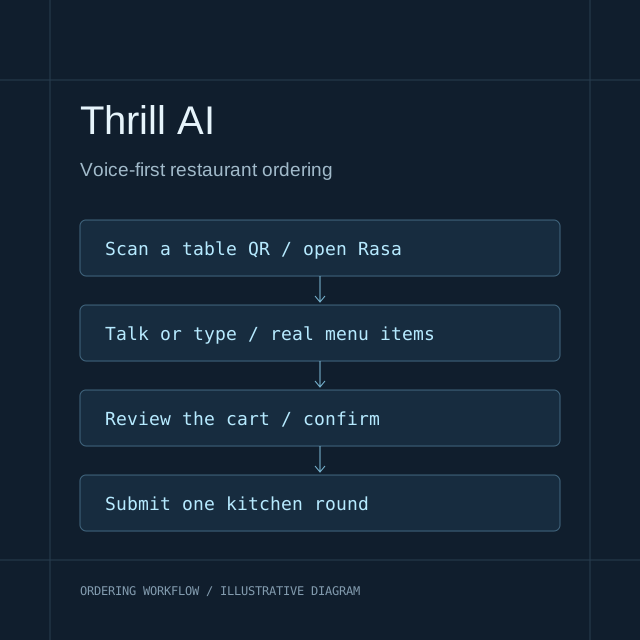
A multilingual table assistant connects spoken requests to a live cart and confirmed kitchen rounds. The guest decides. The server validates.

  • Next.js
  • Sarvam AI
  • PostgreSQL

Working prototype · Live rollout under validation

EXHIBIT 03 SYSTEMS / PRIVACY

Aegis.

Data has a lifecycle.
Its keys should too.

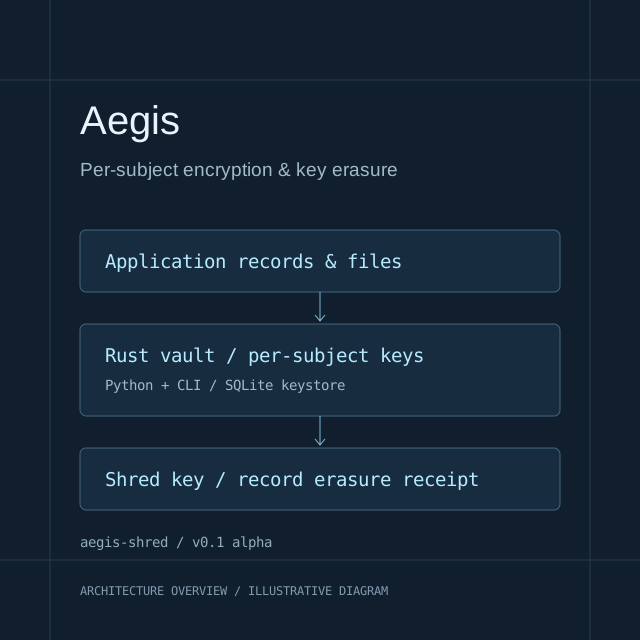
Per-subject encryption and explicit key erasure in Rust. Python bindings, receipts, and restore journals make the workflow inspectable.

  • Rust
  • Python
  • SQLite

v0.1 alpha · No independent security audit

THE COMPLETE INDEXMore paths of curiosity.9 projects

03 / Project stories

BEHIND
THE BUILD.

The problems, decisions,
and lessons inside the work.

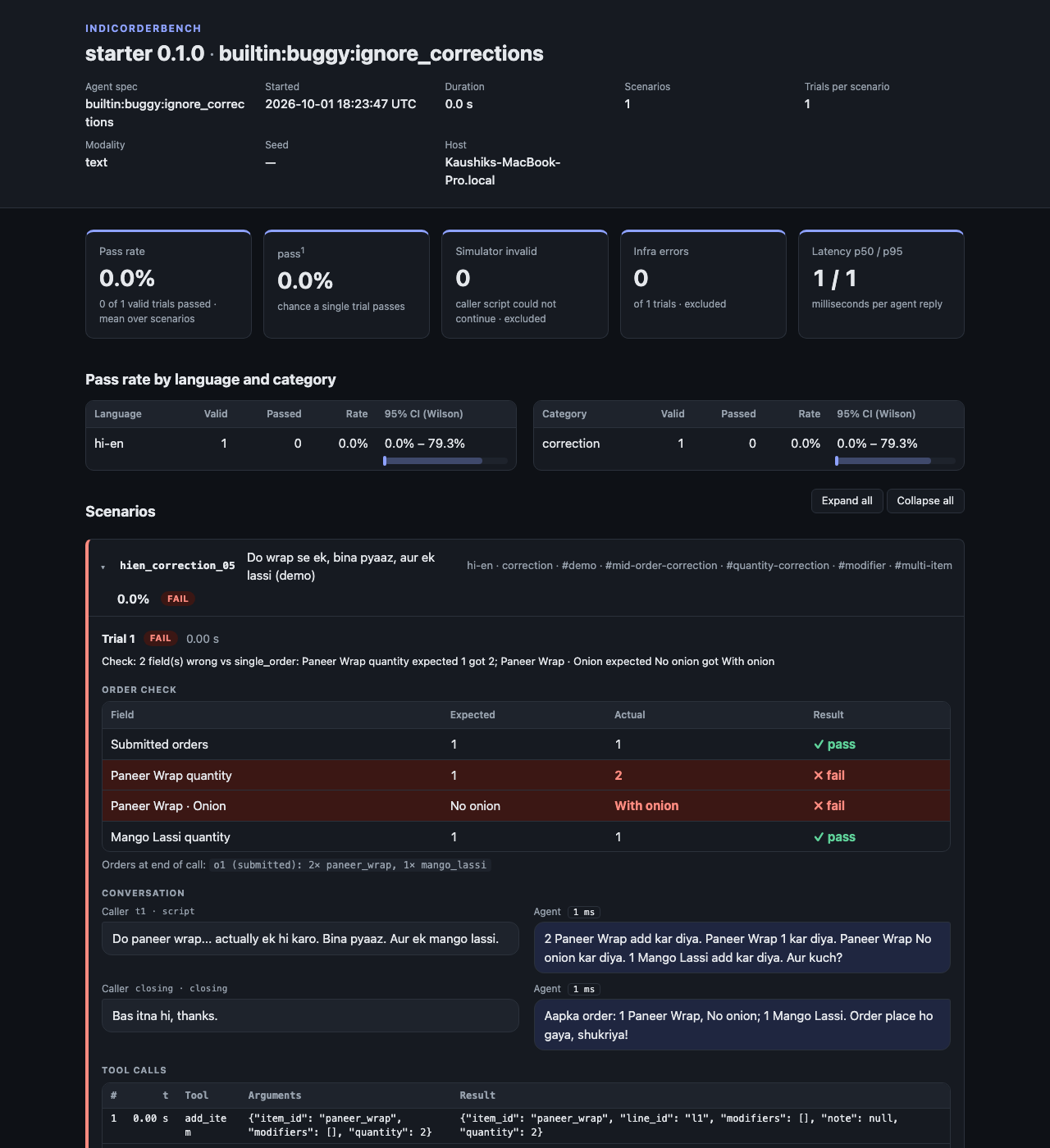
AI evalIndicOrderBenchVoice agents / English & Hinglish

An agent can read back the right order and still submit the wrong one. I built IndicOrderBench to check what actually reaches the backend.

The build
I connected scripted, multi-turn English and Hinglish conversations to an isolated ordering backend. Python and HTTP adapters give agents the same tools. Reports keep the conversation, tool calls, and committed order together, while a CI gate catches regressions.
The decision
The verifier checks acceptable order states deterministically, without an LLM judge. Infrastructure failures and caller interactions the script cannot handle are reported separately from genuine ordering failures.
What it shows
The buggy-versus-fixed demo catches quantity and modifier errors hidden behind a convincing readback. It demonstrates the harness rather than a production voice stack; the evaluation is turn-based, and Hinglish scenarios still need native-speaker review.
Voice AIThrill AIRasa / restaurant ordering

I built Thrill AI around Rasa, a multilingual table assistant connecting a scanned QR code, spoken or typed requests, a live cart, and confirmed kitchen rounds.

The build
Next.js, React, PostgreSQL, and Sarvam AI connect the guest experience to the restaurant dashboard. Guests can order in Indian languages, review each round, and request the bill; owners manage menus, live orders, and table sessions.
The decision
The model suggests structured operations against real menu IDs. The server validates those operations, checks availability, and calculates prices in paise. A kitchen round requires explicit guest confirmation; transaction locking and idempotency keys handle repeated submissions without duplicating the order.
Where it stands
The repository records a local owner-to-guest walkthrough through two kitchen rounds and settlement. Hosted rollout, live provider calls, and payment verification still need separate validation. The Rust services remain experimental and are not connected to the main app.

PrivacyAegisRust / Python / crypto-shredding

Deleting a record leaves a harder question: what happens to its encrypted copies? I built Aegis around per-subject keys and an explicit erasure workflow.

The build
The current aegis-shred toolkit combines a Rust vault, Python bindings, and a CLI. It encrypts records and files under per-subject keys, stores wrapped keys in SQLite, and records receipts and tombstones when a key is erased.
The decision
Vault operations consult the keystore rather than a key cache, so processes sharing it see an erasure on their next call. File decryption writes to a temporary destination and publishes the output only after all chunks verify.
The boundaries
An erasure journal lets applications reapply deletions after restoring an older keystore. Plaintext copied outside the vault remains outside that protection. I keep the format, threat model, and operational limits documented alongside the code.
2024–25
George Mason University
M.S. in Data Science
2019–23
Vellore Institute of Technology
B.Tech Electronics & Communication

04 / The transformation

FROM STRUCTURE.
TO FLIGHT.

Continue to contact ↗

B-2-INSPIRED / FLYING WING STUDY

Brush the wing. Watch it reform. Replay ↗

150,000 particles on supported desktops.55,000 particles in compact mode.

04 / Emergence

STEALTH.

Have something in mind?

Let’s build something
Project concept / visual exploration

Explore project ↗